CEIP PUNTA DE N'AMER (English Web)
  • Home
  • CEIP Punta de n'Amer
  • L'ANGLÈS A CEIP PUNTA DE N'AMER
  • Grammar
  • Reading
  • Listening
  • Writing
  • Phonetics
  • STUDENTS
  • 1st CYCLE
  • 2nd CYCLE
  • Presentació Quadern Anglès
  • Basic Vocabulary
  • Benvolguts Pares...
  • Oficial Exams
  • Cultural Facts
  • STORY TIME
  • Contact Us

Primates: Apes or Monkeys?

Has it got a tail?


Mainly, monkeys have got tail whereas apes do not!

Types of Monkeys


Types of monkeys are classified into two major groups, the New World primates (South and Central America) and the Old World primates (Asia and Africa). The major difference, besides living on different continents, is that the New World primates have tails that can grasp and hold things while the Old World primates can't do much with their tails and sometimes have no tail at all. New World primates do not have versatile opposable thumbs like many other primates and most Old World primates do.


New World Monkeys
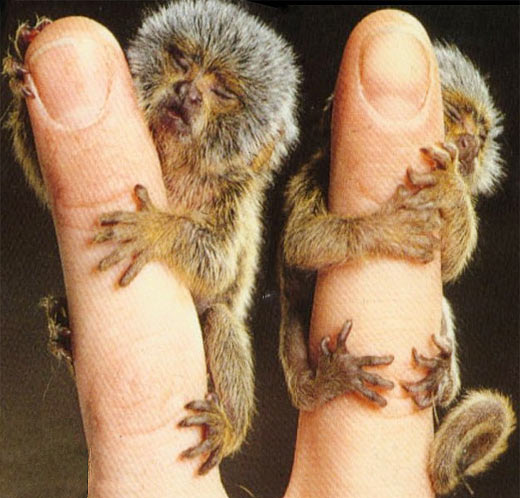
 

Pygmy Marmosets

Baby Pygmy Marmosets

See more about the Pygmy Marmoset
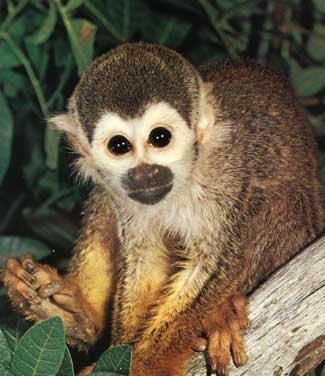
 

Squirrel

Squirrel Monkey

See more about Squirrel Monkeys


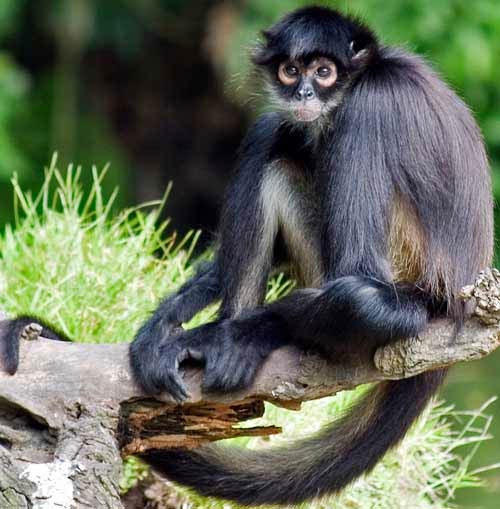
Spider

Spider Monkey

With its very long arms the spider monkey may be the most acrobatic of all the monkeys, looping and swinging very long distances.
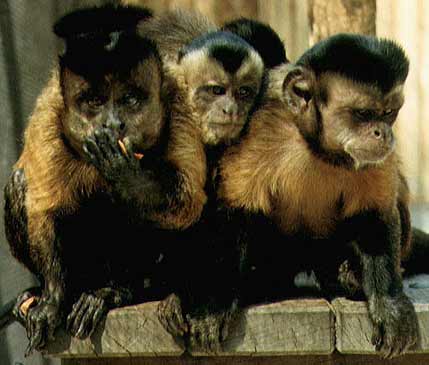
 

Capuchins

Tufted Capuchins


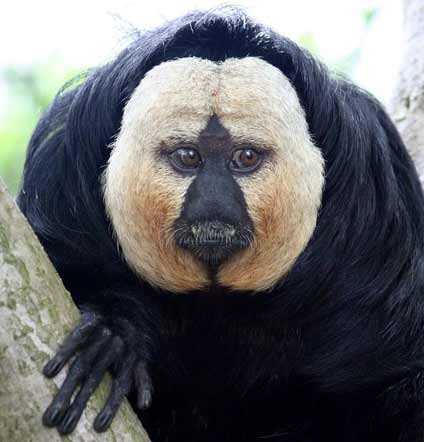
saki

White-faced Saki Monkey


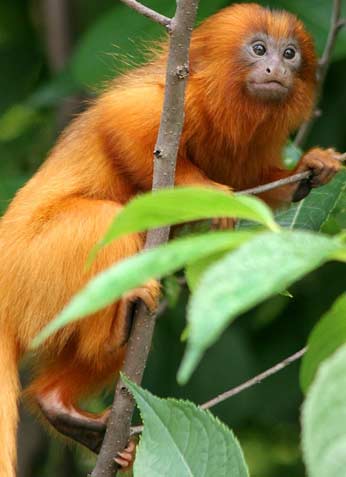
lion tamarin

Golden Lion Tamarin


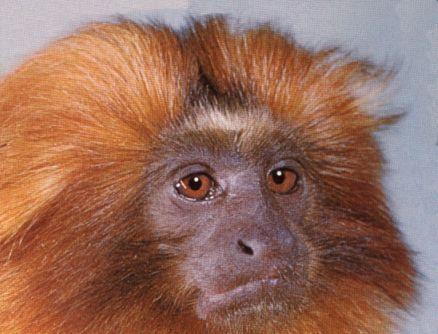
lion tamarin

Golden Lion Tamarin Close-up


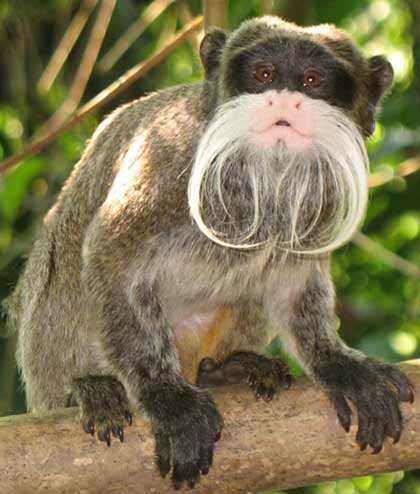
emperor tamarin

Emperor Tamarin


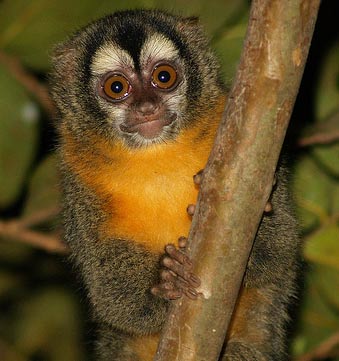
night

Owl or Night Monkey


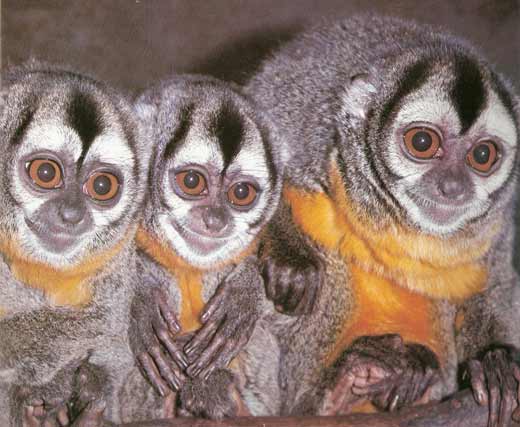
owl family

Owl or Night Monkey Family

The owl monkeys are rain forest monkeys that have a bit of an owlish face that always seems to be smiling. They have many different vocalizations, up to 50 or more, including a piercing alarm shriek. They are night eaters, usually in pairs, they go browsing and foraging, eating fruit, leaves, and insects in the dark forest. In the daytime they sleep together in small family groups within hallowed-out trees.
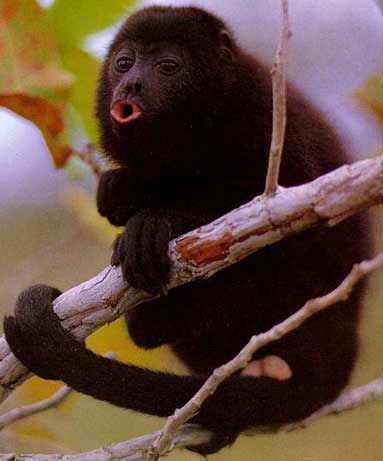
 

Howler

Howler Monkey

Who is the loudest monkey in all the jungle? That's right, the Howler isn't called that for nothing. Their howl can be heard from 3-4 miles (4-6.5 km) away and perhaps even 10. They are also the largest types of monkeys found in the Americas standing up to 2 feet (0.6 m) tall.


Old World
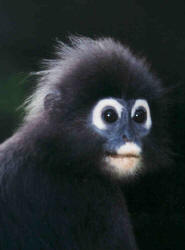
 

Spectacled Langur

Spectacled Langur

These Langurs are leaf eaters and are also known as the Dusky Leaf Monkey. They are not aggresive although they are territorial and stay in troops with a male leader and many females. They prefer trees and daylight and have good hearing and vision.
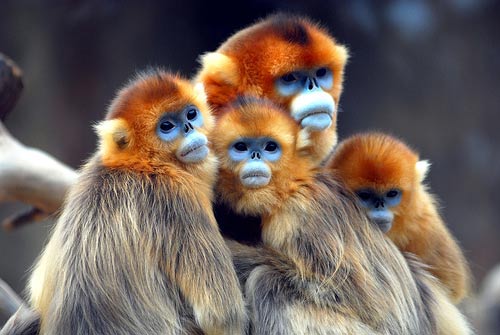
 

golden snub nose

Golden Snub-Nosed Monkeys

These are some colorful Asian animals. They live very high in the trees in secluded densely forested areas, sometimes in very large groups. The fur on their backs can grow to be fairly long. A few specimens of a new species were recently found in a remote part of Myanmar. They are very photogenic be sure to check out their page here: snub-nosed monkeys
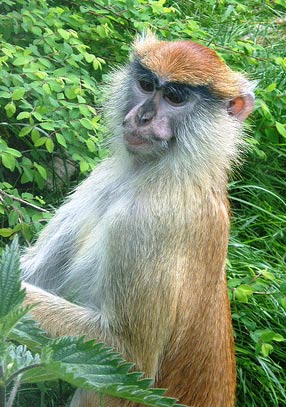
 

patas

Patas Monkey

The patas monkey is slender with long arms and legs, better suited to walking and running than to moving in the trees. They are very fast on the ground moving up to 55 kph or 34 mph. They do prefer to sleep in trees and will each sleep in their own separate tree. They live in Central Africa and the males have blue scrotums.
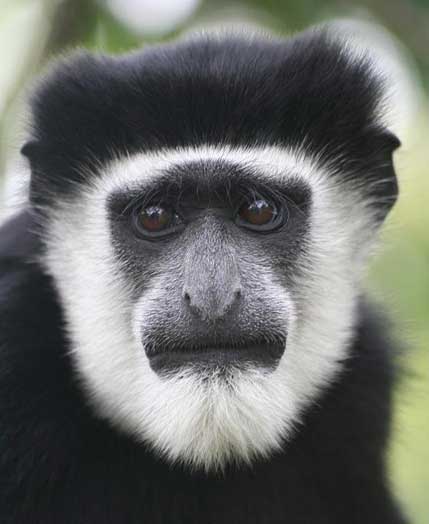
 

colobus

Colobus Monkey

The Colobus is born white and turns black (with white coloring) while still very young. They have no thumbs and prefer treetops and tender leaves in Eastern Africa.
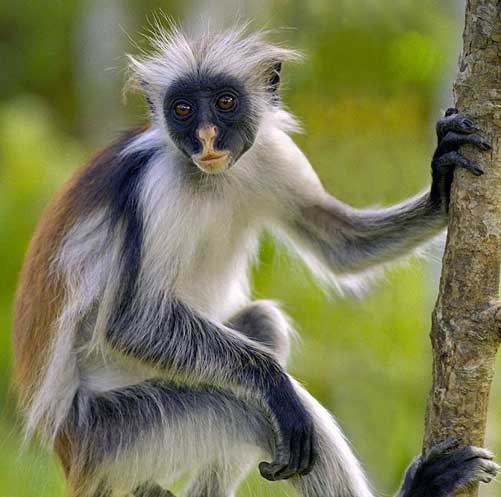
 

red colobus

Red Colobus Monkey

The Red Colobus also eats mostly leaves. They can eat from more than 60 different kinds of plants. Sometimes they can share trees with other monkeys since their diet does not overlap with that of the other monkeys.
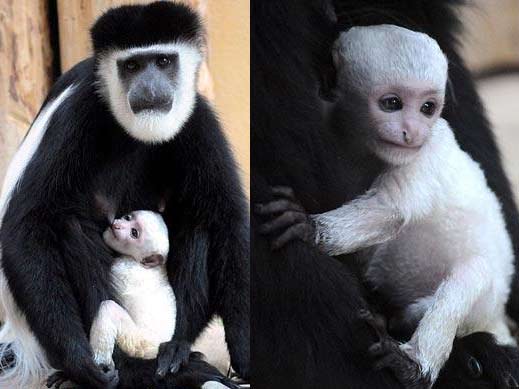
 

guereza

Mother and Baby Colobus Guerezas


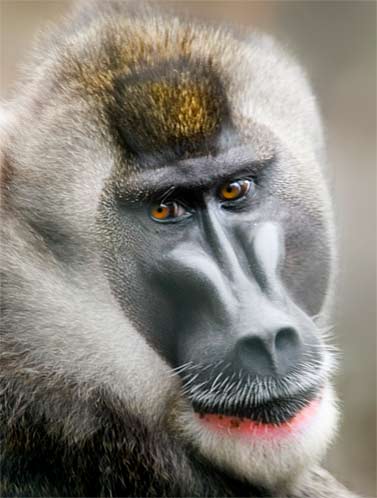
Drill

Drill

The Drill is an endangered primate. In the equatorial region of Africa the drill is known as "bushmeat" and eaten. Their habitat has also been largely destroyed. Drills move on the ground and in the lower levels of trees and eat mostly fruit.
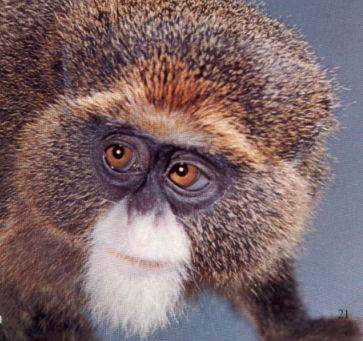
 

DeBrazzas

DeBrazzas Monkey

DeBrazza's monkeys employ a variety of gestures to communicate with each other. These include staring, staring with mouth open, head-bobbing, the fearful grimace, yawning and head-shaking. These gestures have to do with displays of aggression or appeasement.
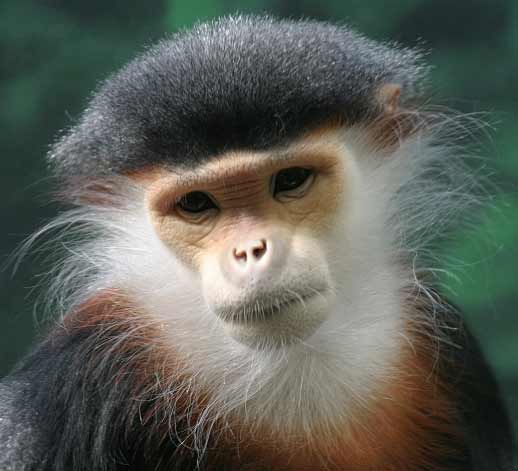
 

douc langur

Douc Langur Monkey


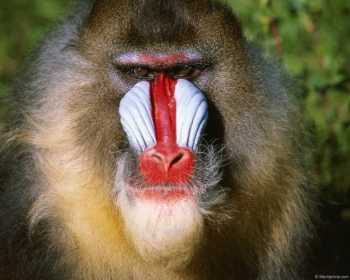
mandrill

Mandrill


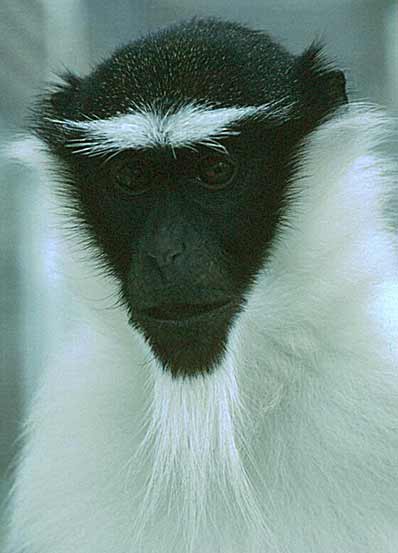
Roloway

Roloway Monkey


Baboons
Papio anubis (Serengeti, 2009).jpg


Apes (not really monkeys)


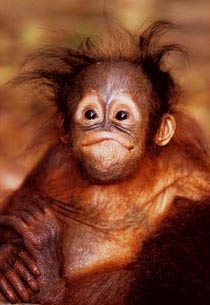
Orangutan

Baby Orangutan

See more about Orangutans
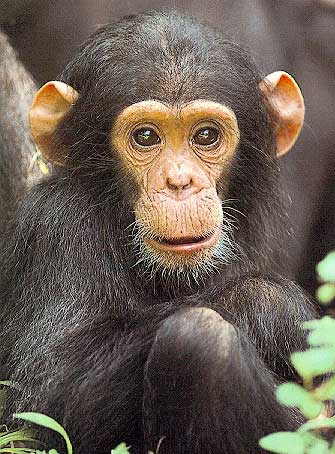
 

Chimpanzee
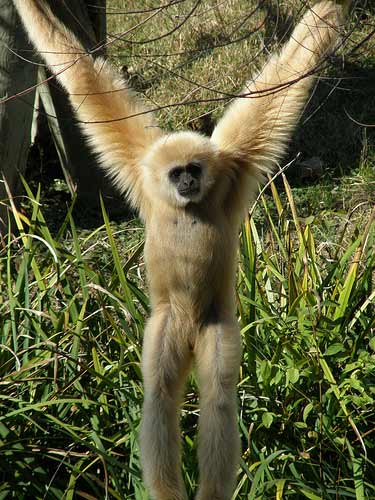
Chimpanzee


gibbon

Gibbon

The Gibbon (13 species) - fast, agile, vocal and social, they are closer to monkeys than the great apes.
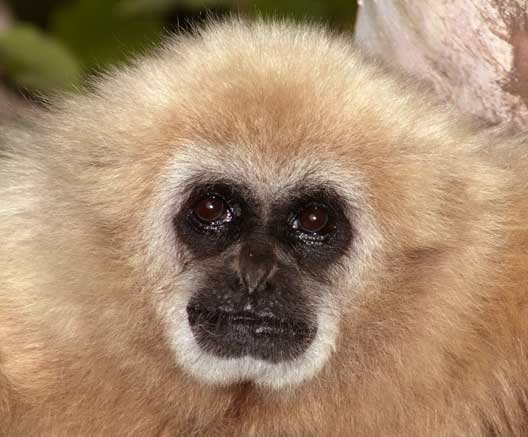
 

gibbon face

Gibbon Close-up


Gorila
Gorillas in Uganda-1, by Fiver Löcker.jpg


All together, the primate group (order) has a much wider scope of mammals from the tiny shrew to the enormous gorilla. Some of these species are certainly among the most intelligent animals and then there are some that are not as intelligent.

Man has always been fascinated with monkeys. They were perhaps the first animals painted on cave walls and depicted in rock art. In Egypt, India, China, Southeast Asia, Greece, and the Americas, ancient civilizations depicted the monkeys and interpreted them in many symbolic ways. Why? Because they can be very fascinating creatures towatch - lively, charismatic, and curious and perhaps because we see the resemblance to ourselves.

  • Abilities
  • Adjectives
  • Alphabet
  • Animals
    • Birds
    • Canine & Feline Animals
    • Cat Breeds
    • Dogs Breed
    • Fish
    • Farm Animals
    • Insects
    • Primates
    • Sea Animals
  • Aquarium or Fish Tank
  • Art
  • & Crafts
  • Clothes
  • Colours & Shapes
  • Daily Routines & Free Time
  • Days of the Week
  • Environment
  • Family
  • Famous Paintings
  • Flags
  • Flowers
  • Fractions
  • Food
  • Garden
  • Gift Shop
  • Giving Directions
  • Health & Illnesses
  • Height & Weight
  • Hobbies
  • Holidays
  • House
  • How to read Numbers
  • How to read the Years
  • How to read Music
  • Inventions
  • Irregular Verbs
  • Library
  • Life Quotes
  • Literacy
  • Maths
  • Means of Transport
  • Media
  • Mountain Sport Material
  • Musical Instruments
  • Nationalities
  • Numbers
  • Occupations
  • Origami
  • Parts of the Body
  • Periods of Time
  • Physical Description
  • Places in a City and Jobs
  • Plurals
  • Prepositions
  • School
  • Science
  • Seasons
  • Solar System
  • Spices
  • Sports
  • Street
  • Subjects
  • Taste
  • Theatre
  • Theme Parks
  • Tools
  • Tree
  • TV Programmes
  • Verbs Pronunciation
  • Visual Effects
  • Ways of Transport
  • Weather
  • Web Ending Countries
  • Zodiacal Signs

+ School English Webs


Aviso legal | Política de privacidad | Política de cookies | Mapa del sitio | Retirar contrato
Inicia sesión Salir | Editar
Jimdo

Esta página web ha sido creada con Jimdo Creator. ¡Regístrate ahora gratis en https://es.jimdo.com!

  • Home
    • Descobreix les Illes Balears
    • Fish & Chips
      • Dance Step by Step
      • F&C Quiz more ...
      • F&C Documentació
      • 21st January Meeting
      • Let's play a bit
      • Hey Dj!
      • Feelings
    • English or American?
    • Right on the Button Quiz
  • CEIP Punta de n'Amer
    • Matemàtiques
    • Times Table
    • Let's learn typing!
    • Lectura
    • Avaluem el que sabem!
    • Jocs d'Estratègia
  • L'ANGLÈS A CEIP PUNTA DE N'AMER
    • Material de l'alumne
    • Com es treballarà?
    • Què s'Avalua?
    • Com s'Avalua?
    • Què és el TIL?
    • TIL
    • Què ha de saber sí o sí?
    • Com puc ajudar al meu fill?
    • No sé per on començar!
    • Tenen deures?
    • Deures de nadal / setmana santa / estiu ...
    • Quan tenen l'examen?
    • Què entrarà a l'examen?
    • Crec que necessita ajuda extra!
    • Recursos
  • Grammar
    • Ability
    • Adjectives
    • Adverbs
      • Adverbs of Frequency
      • Adverbs of Manner
    • Advice
    • Because / So / And / But
    • Before / After
    • Comparatives / Superlatives
    • Conditionals
    • Exclamatory Sentences
    • Future: Going to
    • How + Adjective
    • Indefinite Pronouns: body / thing / where
    • Me too / Me neither
    • Montessori Grammar
      • Article
      • Adjective
      • Noun
      • Verb
      • Pronoun
      • Adverb
      • Preposition
      • Conjunction
      • Interjection
      • Question Words
    • Obligation: Must / Mustn't / Not have to
    • Passives
    • Past Tense
      • Was / Were
      • Interrupted Past
      • Past Simple
      • Past Continuous
    • Phonetics
    • Prediction: Will / Won't
    • Prepositions
    • Present Perfect
    • Present Tense
      • Present Simple
      • Present Continuous
      • Present Simple & Continuous
    • Pronouns
    • Punctuation
    • Quantifiers: a lot, a few, a little, ...
    • Quantifiers: A/an - some/any
    • Quantifiers: Too / Enough
    • Relative Clauses: who / that / where
    • Reported Speech
    • Singular / Plural
    • Speculation: Might / May / Could
    • There + Verb to be
      • There is / are
      • There was/were
    • Time Expressions
    • Verbs (Regular / Irregular) Primary
    • W-Question
    • Want to
  • Reading
    • Types of Readings
      • Persuasive
      • Instructive
      • Informative
      • Descriptive
    • Body of Readings
    • Greek Gods and Goddesses
    • Fairy Tales
  • Listening
  • Writing
  • Phonetics
  • STUDENTS
    • Sé estudiar
    • Sé presentar les meves feines
    • Realitzar Activitats
    • Dictionaries
    • Pronunciation
    • Conjugació Verbs
    • Nursery
      • Videos
      • Videos II
      • Videos III
      • Videos IV
      • Videos V
  • 1st CYCLE
    • Curriculum
    • First Grade
      • Unit 0 & 1
      • Unit 2
      • Unit 3
      • Unit 4
      • Unit 5
      • Unit 6
      • Unit 7
      • Unit 8
    • Second Grade
      • Readings
      • Unit 0 & 1
      • Unit 2
      • Unit 3
      • Unit 4
      • Unit 5
      • Unit 6
      • Unit 7
      • Unit 8
    • Third grade
      • Readings
      • YLE Starters
      • Maths
      • Science
      • 1st Term
      • Unit 0 & 1
      • Unit 2
      • Human Senses
      • 2nd Term
      • Unit 3
      • Unit 4
      • Unit 5
      • 3rd Term
      • Unit 6
      • Unit 7
      • Unit 8
  • 2nd CYCLE
    • Curriculum
    • Fourth Grade
      • Readings
      • YLE Movers
      • Maths
      • Science
      • 1st Term
      • Unit 0 & 1
      • Unit 2
      • Plants
      • 2nd Term
      • Unit 3
      • Unit 4
      • Unit 5
      • 3rd Term
      • Unit 6
      • Unit 7
      • Unit 8
    • Fifth Grade
      • Readings
      • YLE Flyers
      • Maths
      • Science
      • 1st Term
      • Unit 0 & 1
      • Unit 2
      • 2nd Term
      • Unit 3
      • Unit 4
      • Unit 5
      • 3rd Term
      • Unit 6
      • Unit 7
      • Unit 8
    • Sixth Grade
      • Readings
      • IAQSE
      • Maths
      • Science
  • Presentació Quadern Anglès
  • Basic Vocabulary
    • Abilities
    • Adjectives
      • Behaviour
    • Alphabet
    • Animals
      • Birds
      • Canine & Feline Animals
      • Cat Breeds
      • Dogs Breed
      • Fish
      • Farm Animals
      • Insects
      • Primates
      • Sea Animals
    • Aquarium or Fish Tank
    • Art
      • Pop Art
    • & Crafts
    • Clothes
    • Colours & Shapes
      • Colours II
    • Daily Routines & Free Time
    • Days of the Week
    • Environment
    • Family
    • Famous Paintings
    • Flags
    • Flowers
    • Fractions
    • Food
      • Food & Drinks
      • Food - Fixed Menu -
      • Food - Healthy Eating -
      • Month Fruit & Vegetables
    • Garden
    • Gift Shop
    • Giving Directions
    • Health & Illnesses
    • Height & Weight
    • Hobbies
    • Holidays
    • House
      • House (Rooms)
      • Home Appliance
      • Chores & Kitchen
    • How to read Numbers
    • How to read the Years
    • How to read Music
    • Inventions
    • Irregular Verbs
    • Library
    • Life Quotes
    • Literacy
    • Maths
    • Means of Transport
    • Media
    • Mountain Sport Material
    • Musical Instruments
      • Musical Terms
      • Musical Activities
    • Nationalities
    • Numbers
    • Occupations
      • Hotel
      • Hospital
      • School
    • Origami
    • Parts of the Body
    • Periods of Time
    • Physical Description
    • Places in a City and Jobs
    • Plurals
      • Plurals II
    • Prepositions
    • School
    • Science
    • Seasons
    • Solar System
    • Spices
    • Sports
    • Street
    • Subjects
    • Taste
    • Theatre
    • Theme Parks
    • Tools
    • Tree
    • TV Programmes
      • La Tele en los 80'
    • Verbs Pronunciation
      • Verbs 1st
    • Visual Effects
    • Ways of Transport
    • Weather
    • Web Ending Countries
    • Zodiacal Signs
  • Benvolguts Pares...
    • Campaments d'Estiu
    • Tutoria
    • Què és important avui en dia?
    • Els alumnes de 6è i el Món Laboral
    • Videos / Imatges
      • Videos II
    • Històries
    • Jocs de Lògica
    • La Curva del Olvido
    • Valors / Qualitats / Defectes
  • Oficial Exams
    • FIRST CERTIFICATE EXAMS
    • YOUNG LEARNERS EXAMS
      • Let's Practise!
      • Let's Practise Speaking!
      • Listenings
  • Cultural Facts
    • Thanks Giving Day
    • Halloween
    • Halloween Stories
    • Christmas
    • Christmas Stories
    • Easter
    • Easter Stories
    • London
    • VIP
      • Monarchies Around the World
  • STORY TIME
  • Contact Us
Cerrar